Spotlighting the people shaping Dev-Afrique’s work across Africa
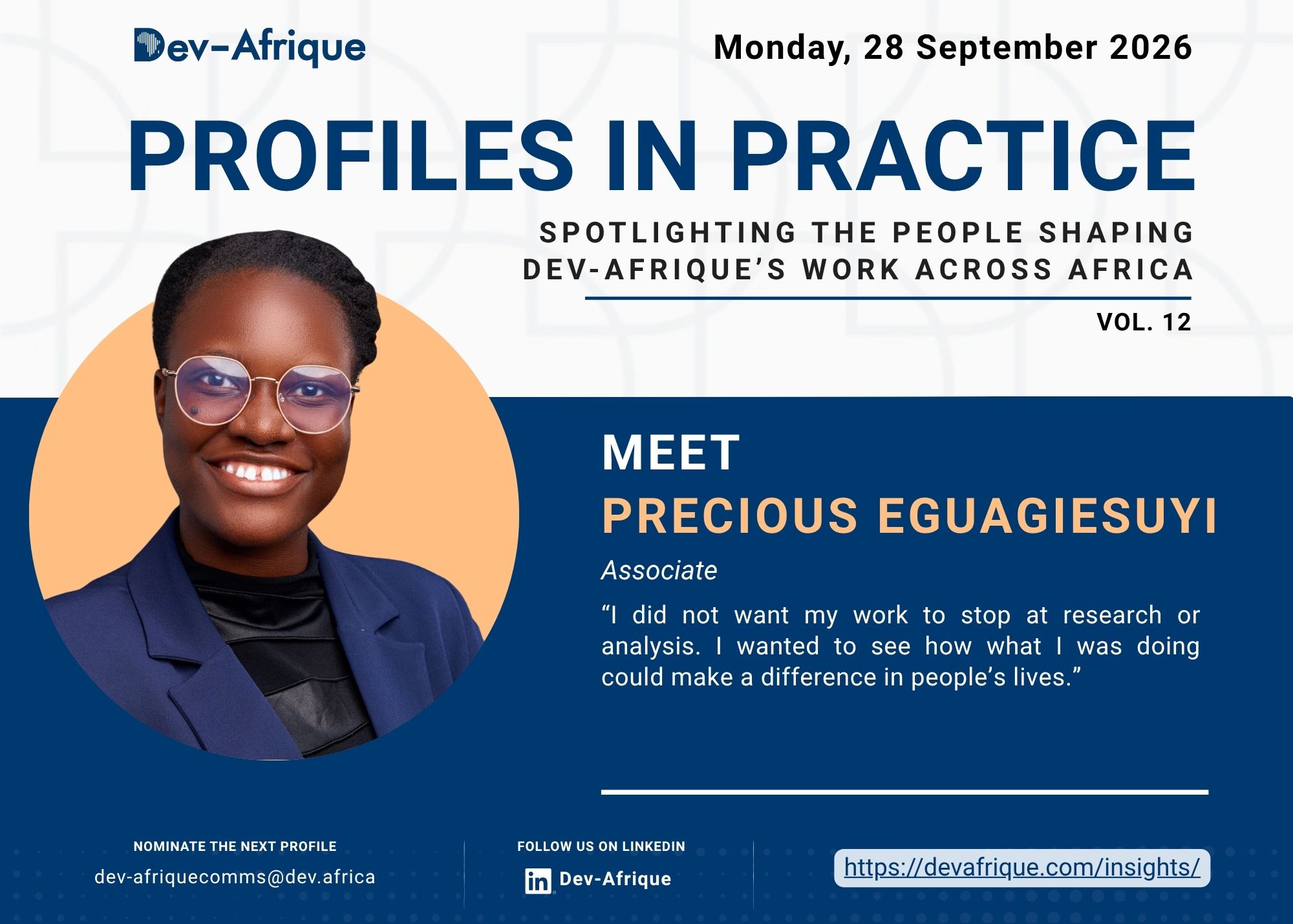
Precious Eguagiesuyi is a GIS professional at Dev-Afrique with a background in Meteorology and Climate Science and experience in geospatial analysis, data management, and the application of GIS to development challenges. Her work focuses on using spatial data and analysis to understand what is happening on the ground and support informed decisions and interventions.
Her interest in the environment extends beyond her professional work. With a long-standing interest in art, geography and the natural world, Precious is the kind of person who looks out of an aeroplane window and identifies the different cloud formations below. That curiosity has shaped her professional interests, from exploring environmental applications of GIS to using geospatial analysis to support immunisation activities and understand whether interventions are reaching the communities they are intended to serve.
In this conversation, Precious discusses her path from aspiring architect to Meteorology and Climate Science graduate and GIS professional, her introduction to development advisory, and her experience applying geospatial analysis to development challenges. She also shares the work that happens behind the scenes to produce reliable data, the importance of quality and measurable outcomes, and how working at Dev-Afrique has broadened her understanding of the role technical expertise can play in addressing development challenges across Africa.
1. What path led you to your current role at Dev-Afrique?
GIS was really what led me to Dev-Afrique. I studied Meteorology and Climate Science, and although I was a relatively fresh graduate, I already had some experience through internships and GIS work before leaving university.
Meteorology was not my original plan. Growing up, I wanted to be an architect because I loved drawing, especially technical drawing. I also loved mathematics and geography. I applied to study architecture, but I did not meet the cut off mark and was offered Meteorology and Climate Science instead. Initially, I planned to change courses, but once I started studying Meteorology, I realised how closely it connected with geography, which I had always enjoyed. I became interested in it and decided to continue.
GIS eventually became an area I wanted to pursue professionally. When I came across Dev-Afrique, I was looking for a GIS opportunity, but I also wanted to work somewhere GIS was being used to solve real problems. I did not want my work to stop at research or analysis. I wanted to see how what I was doing could make a difference in people’s lives. That was what attracted me to Dev-Afrique.
2. What first pulled you toward development advisory work?
I actually did not know much about development advisory before joining Dev-Afrique. What interested me was finding ways to apply GIS to real world challenges.
My background initially made me think about GIS mainly from an environmental perspective, looking at flooding, water bodies, weather patterns and disasters. I was interested in how satellite data could help us understand what was happening on the ground. I could also see GIS becoming increasingly relevant in Nigeria, including in agriculture, where satellite and weather data can help farmers understand crop health and changing conditions across large areas of land.
What I wanted was to see technical work translate into something tangible for people. It was only after joining Dev-Afrique that I began to understand development as a space of its own, with different actors, funders and interventions, and to see how technical skills like GIS fit into that work.
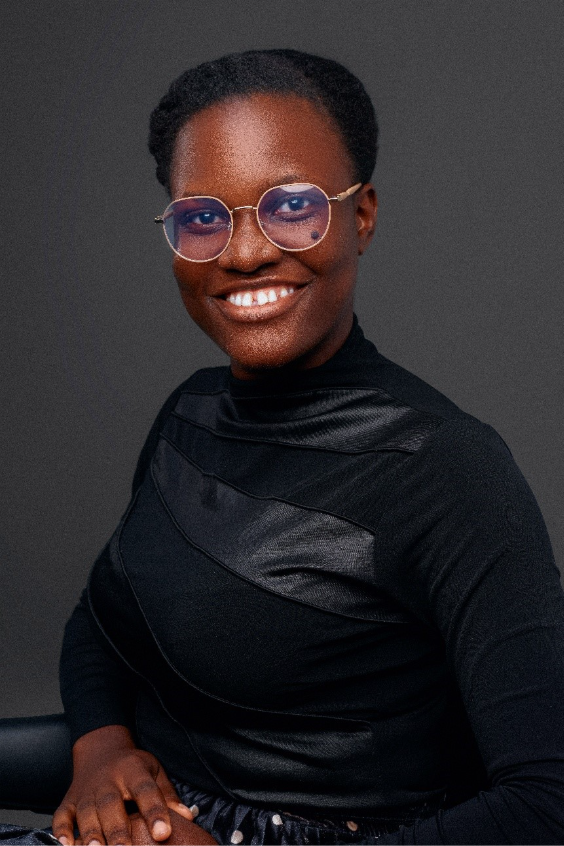
3. Since joining Dev-Afrique, what has your experience been like both professionally and personally?
Professionally, one thing that has stood out to me is the focus on impact. It is not enough to say that an activity has been completed. There is always a why behind what we are doing. What outcome is this activity contributing to? What difference is it making? If an activity is not leading towards an outcome or impact, then we have to ask why we are doing it.
Personally, it has stretched me. Development advisory is very fast paced. Sometimes you think you are finishing one thing and something else is already coming. That makes structure important because you need to know where you are, what is outstanding and what comes next.
Coming into this environment without having worked in this kind of space before was challenging. At the same time, I have learned a lot, and not only about GIS. I like being somewhere where things are happening and where the work has an impact. But we are also human, and that pace can be stressful. For me, the experience has been both interesting and demanding.
4. Is there a project or piece of work at Dev-Afrique that has stayed with you? What made it meaningful?
The work that has stayed with me most is the KIMBLE project, especially seeing how geospatial analysis can be used to improve immunisation activities.
What made it meaningful was seeing the connection between what we were doing on the computer and what was actually happening in the field. Through data quality analysis, for example, we could track enumerator movements and submissions and identify inconsistencies in where or how data was being collected. The analysis was not abstract. We could use it to validate what was actually happening on the ground.
GIS could also help identify settlements reached during campaigns and areas that had been missed. Seeing that information being used to support immunisation activities and efforts to reduce polio showed me the practical value of the work we were doing.
5. What is one part of your work that often happens behind the scenes but is essential to making projects successful?
Data preparation and cleaning.
People normally see the final analysis or result, but they do not necessarily see how many hours go into getting the data ready before you can even reach that point.
Even with code and AI tools available, you still have to understand the data yourself. There was a period when I spent almost an entire day and night cleaning a dataset. It can take a huge amount of time, but if the data going into your analysis is not right, the result will not be right either.
Data cleaning is one of those essential parts of the work that happens behind the scenes and is easy to underestimate.
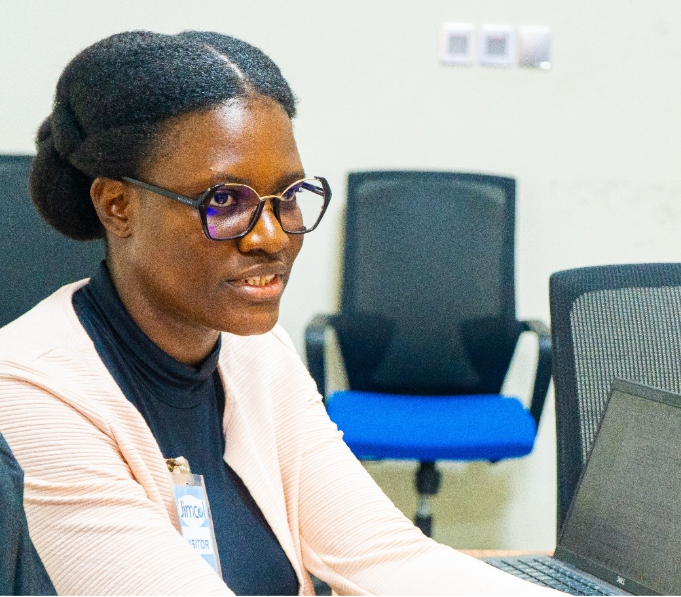
6. From your perspective, what makes Dev-Afrique’s approach to development work distinct?
The emphasis on quality.
Development work is fast paced, and of course we want to meet timelines. But at Dev-Afrique, the goal is not simply to say, “We delivered this” or “We completed that.” We also want to know that what we delivered meets the standard expected of us.
Sometimes that means having a conversation about whether something should be delivered quickly or whether we need more time to do it properly. For me, that commitment to the quality of the work we produce is something that makes Dev-Afrique distinct.
7. How would you describe the culture or team spirit at Dev-Afrique?
Energy.
Everyone is on their A game. When I first joined, I sometimes wondered, “How does everybody do this?” I was new to the development space, so things that were already second nature to other people took me longer.
Over time, I realised that experience makes a difference. When you have worked in the space for some time, you begin anticipating what will be needed before someone even asks for it. When you are new, you are still learning those requirements and systems.
Being around a team operating at that level pushes you to keep building yourself and working towards that standard.
8. What is something people at work might not immediately guess about you?
I am actually an introvert.
People may notice that I can be quiet, but they may not realise how much effort it sometimes takes for me to speak up. If it were entirely up to me, I could sit through a meeting without speaking at all or walk into a room and remain quiet.
I make a conscious effort to engage, especially with colleagues I work closely with, so people in the Abuja office might not immediately describe me as an introvert. But naturally, I am.
There is also another side of me that people at work probably do not see very often. I love art and the environment. I have always loved anything artistic, including pencil sketches, painting and design. Because I studied Meteorology and Climate Science, I also look at the natural environment differently. Even when I am travelling by plane, I take pictures of clouds and find myself identifying the different cloud types. For me, there is art in the environment too.
9. Has there been a moment during your time at Dev-Afrique that reminded you why this work matters?
There was an analysis I had to run related to settlement reach for immunisation activities. The code had originally been written by colleagues, but when the project continued in a different form, I found myself having to run the analysis largely on my own.
Running someone else’s code can be difficult when something goes wrong because you first have to understand what they built before you can identify the error. At the time, the colleague who would normally help was very busy, so it became me and AI trying to figure it out. It was stressful.
Eventually, I got it to work.
What mattered was what happened afterwards. The results helped identify settlements that some previous campaign activities had not reached, and that information was used to support efforts to reach some of those communities.
Moments like that remind me that even when a task is technically difficult or stressful, there are people and communities at the other end of the analysis.
10. Has working at Dev-Afrique changed the way you think about development challenges and opportunities across Africa?
Yes. Before joining Dev-Afrique, I did not have much exposure to the development space. I knew that different interventions were happening, but working here has helped me understand how complex development challenges can be and how much goes into addressing them.
One thing I have learned is that identifying a problem or making recommendations is only one part of the process. What matters is whether those recommendations translate into action and whether that action leads to sustained change. It has made me think more about the outcomes and impact of development interventions, rather than simply the activities being implemented.
It has also shown me what can happen when technical expertise is applied to development challenges. Coming from a GIS and environmental background, I have seen how geospatial analysis can be applied in areas I had not initially considered, including health and immunisation. That has broadened the way I think about where my own skills can contribute to development across Africa.
11. What does being “DA Proud” mean to you personally?
For me, it means being in a place where growth is recognised.
I have heard people talk about workplaces where someone can put in the effort and demonstrate growth but still be told they have not been there long enough to progress. At Dev-Afrique, I have experienced something different. Within my first year, I received two promotions. For me, that showed that growth, effort and results were being recognised, regardless of how long I had been with the organisation.
That recognition matters to me. I also value being part of a work culture where you can relate with people across the organisation and where there is flexibility, even though the work itself can be demanding.
Being DA Proud, for me, is knowing that my growth and contribution are seen and appreciated.